Sightings – Xinyue Liu
Invisibility as Violence: When Absence Becomes Evidence
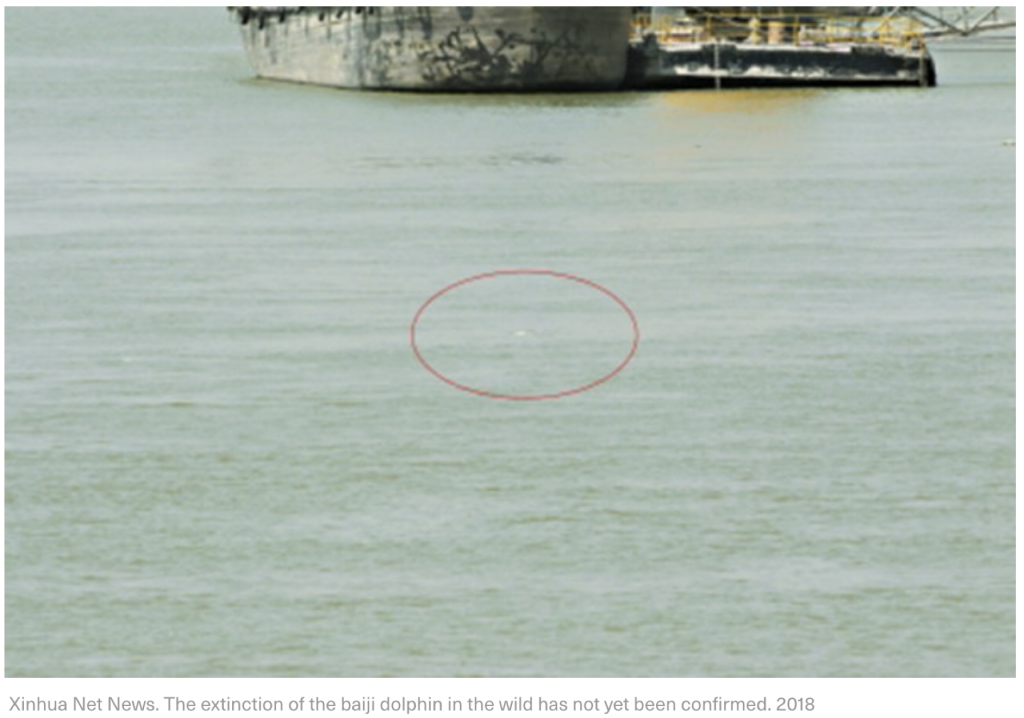
Liu examines fragmented and indistinct images as traces of marginalized existence. These images do not merely fail to represent; they actively reveal the violence imposed on those pushed to the edges of visibility.
Drawing on Judith Butler’s concept of “grievability,” certain lives are excluded from recognition and mourning—such as political enemies, queer subjects, or non-human entities. This exclusion renders violence against them invisible, normalized, and perpetuated.
Within this framework, marginalized subjects persist as visual residues—partial, elusive, and ungraspable. Over time, they may transform into myths, dreams, or fragments of collective memory.
The image thus operates as a closed field of force. Each photographic act is both a capture and a cut—a moment in which the subject becomes spectral. These ghostly traces mark the ruptures within a continuously fragmenting world.
An Informal and Incomplete Journey – Xiaoyu Weng
Creative anti-search encryption as a new language
When #404 became the norm, it gave birth to all sorts of creative anti-search encryption, such as vertical typesetting, reversed typesetting, and text written in oracles, emojis, Morse code, braille, and even Elvish and Klingon. As people collect and put these posts together, one question remains: Why are all the encrypted versions of these posts still deleted? Who in the community casually reports this “unlawful content”? Are the “internet safety officers” who review this content giggling while they press the “delete” button?
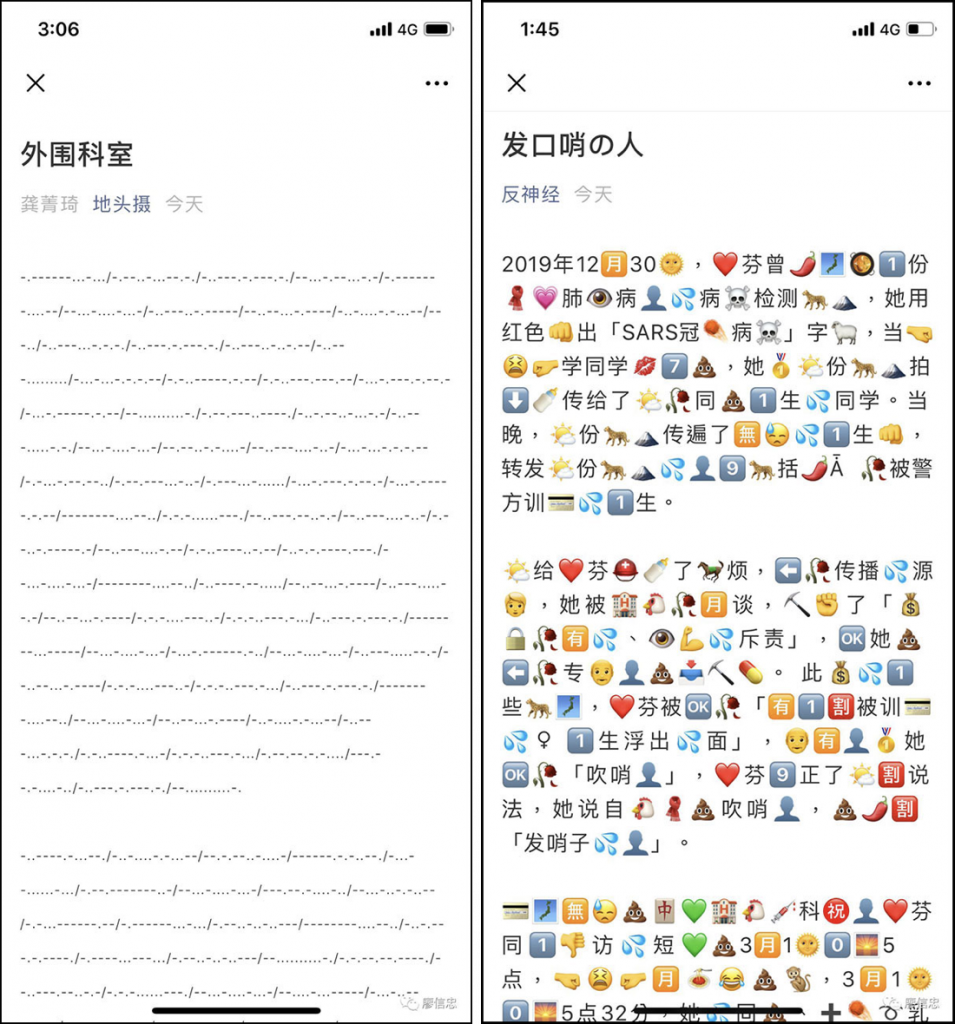
My project was inspired by this article, too. But my point was not to accuse or argue with censorship conduct. Instead, I found it is very interesting to see how people create a new language to communicate, and at the same time, escape from the invisible censorship traps. And why do we have to develop those kinds of skills?
Leave a Reply